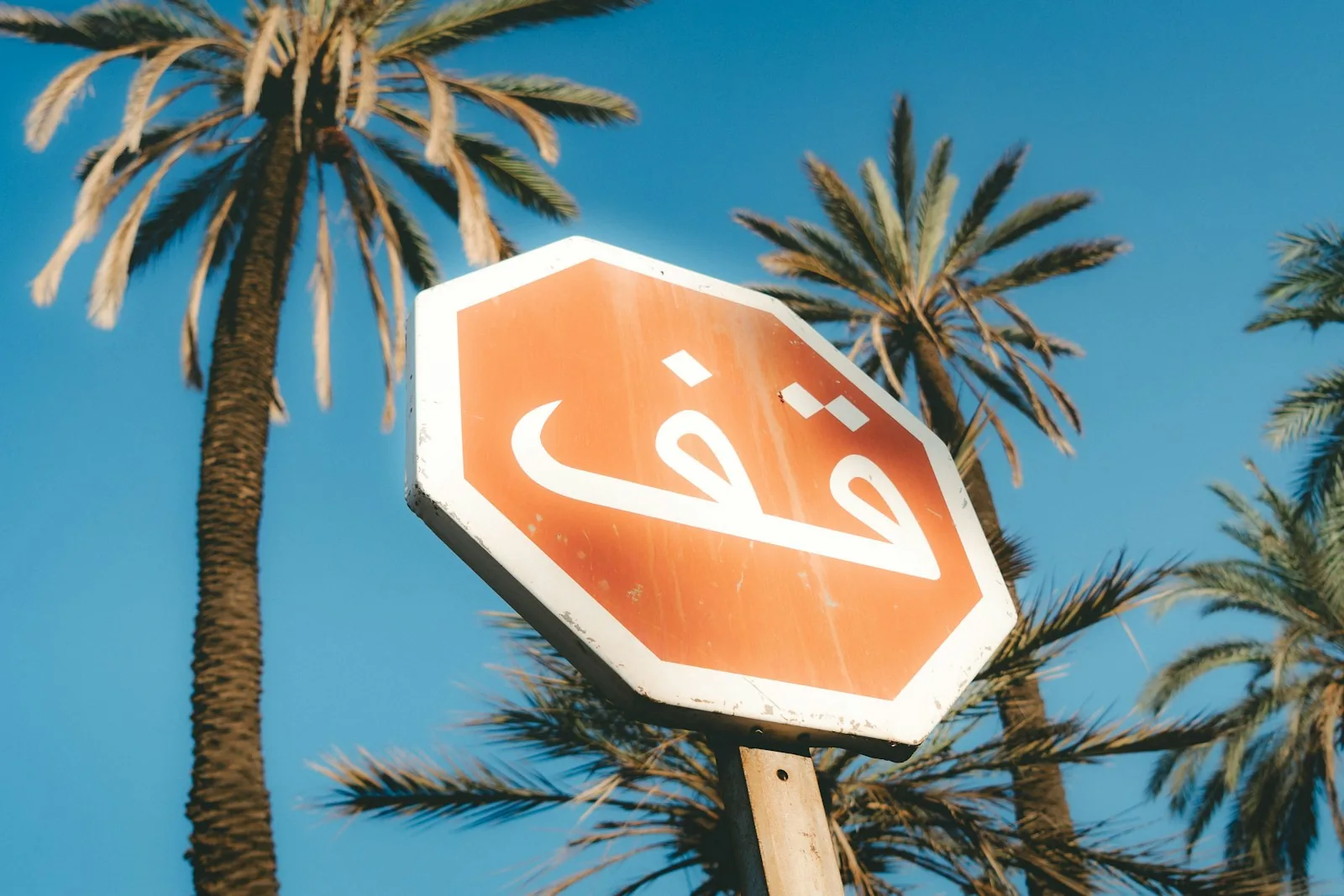

In an AI product, language is not a setting you translate at the end. It is behavior you design, write down and test.
Multilingual AI UX in Morocco: what changes when the interface talks back
Multilingual AI UX in Morocco is not a translation task. A Moroccan user might open an app in French, ask the assistant a question in Darija typed with Latin letters and numbers, read the answer in Arabic, and then switch to English for a product name. Static interfaces could get away with a language picker and two sets of strings. AI interfaces cannot, because the user now writes free text and the product writes back.
The direct answer for product teams: design the language layer as part of the product, not as a localisation step at the end. Decide how the interface handles script direction, how the assistant matches the user's register, and how voice, text and buttons stay consistent across Arabic, French and Darija. Teams that make those decisions early ship AI features that feel local. Teams that leave them to the model ship features that feel imported.
Why AI makes the language problem harder, not easier
A classic Moroccan web or mobile product had a bounded language problem. Designers mirrored layouts for right-to-left Arabic, writers translated every string, and QA checked that nothing overflowed. Every sentence on screen was written in advance.
An AI feature breaks that boundary. The input is open: users type the way they speak, and in Morocco that often means code-switching inside one sentence. The output is generated: the model decides the wording, the length and sometimes the language of its answer. Mixed-direction text appears inside a single message, for example an Arabic sentence that contains a French brand name, a phone number and a price. The W3C explains how browsers handle this in its guide to structural markup and right-to-left text in HTML, and its notes on inline bidirectional markup show why generated text needs explicit direction handling rather than hope.
So the question for a team in Casablanca or Rabat is no longer "which languages do we support?" It is "how does our product behave when the user and the model both mix languages?"
The hype, the reality and the fear
The hype: modern models speak every language, so multilingual UX is solved. Plug in an assistant and Moroccan users get a native experience for free.
The reality: large models handle Modern Standard Arabic and French well in many tasks, but quality on Darija, and especially Darija written in Latin script with digits standing in for Arabic letters, varies a lot by model and by task. Even when the model understands the input, it often answers in a formal register the user did not choose, or in a different language from the one they typed. And the interface around the model (bubbles, citations, buttons, numbers, dates) still breaks if nobody designed it for mixed direction. The parts that hold up today: understanding mixed input reasonably well, answering in the language the user picks, and drafting content in Arabic and French for a human to review.
The fear: Moroccan designers and writers worry that AI translation and generation make their language skills worthless, and that global tools will flatten local products. The honest answer runs the other way. Generic models are weakest exactly where local knowledge is strongest: register, tone, Darija, and knowing when a French term is the natural choice over an Arabic one. Designers who can specify those behaviors and test them with real users become harder to replace, not easier.
The Script, Register, Channel framework
A useful way to scope multilingual AI UX is to make three separate decisions for every AI feature. Call it the Script, Register, Channel framework.
Script is about direction and characters. Which scripts can appear in input and output: Arabic script, Latin script, Latin-script Darija with digits, Tifinagh where relevant? How does each message bubble set its direction: from the first strong character, from the user's setting, or per message? How are numbers, currency and dates displayed inside Arabic text? Build layouts with CSS logical properties (start and end, not left and right), which MDN documents in its reference on logical properties and values, so one component works in both directions.
Register is about how the assistant sounds. Formal Arabic, everyday Darija and French each carry a different relationship with the user. A banking assistant and a food delivery assistant should not sound the same. Write down which register the assistant uses by default, when it mirrors the user, and when it must stay formal (legal terms, fees, medical or financial information). Then put those rules in the system prompt and in your evals, not only in a brand document.
Channel is about voice, text and interface working together. If a user speaks Darija to a voice feature, should the transcript show Darija in Arabic script, in Latin script, or a French summary? Do button labels follow the app language while the assistant follows the user? Consistency across channels is what makes the product feel designed rather than stitched together.
Static localisation vs multilingual AI UX
Decision | Static localised app | AI feature, default model behavior | AI feature, designed for Morocco |
|---|---|---|---|
Input language | Chosen once in settings | Anything, handled as the model sees fit | Anything, including Latin-script Darija, tested on real samples |
Output language | Fixed per string | Often switches or defaults to English or formal Arabic | Follows a written rule: user choice first, then mirror the user |
Text direction | Whole screen mirrored | Breaks inside mixed messages | Set per message, with isolated numbers, names and links |
Register and tone | Written by a copywriter | Generic and often too formal | Defined per product and enforced in prompts and evals |
Voice | Rarely offered | Transcription quality varies on Darija | Transcript script chosen deliberately, with an easy edit step |
Quality checks | Translation review | Usually none | Multilingual eval set built from real user phrasing |
Best for | Fixed content and forms | Demos | Products Moroccan users rely on daily |
The right column is more work up front. It is also the only one that survives contact with real users in Casablanca, Fes or Agadir.
What to design first
Start with the language picker you probably already have, and give it a second job. Keep the interface language setting, then add a separate preference for assistant answers, with "match how I write" as an option. Users then control the outcome instead of guessing what the model will do.
Next, design the message component for mixed direction. Each bubble should set its own direction, and embedded fragments such as order numbers, amounts, URLs and Latin product names should be isolated so they do not scramble the sentence around them. Test with real generated content, not placeholder text.
Then write the register rules and turn them into checks. Collect a few dozen real questions from users in Arabic, French, Darija in both scripts and mixed forms. Run every model or prompt change against that set and read the answers. This is the same idea behind treating design systems as AI context: the rules only work if the model actually receives them.
Finally, keep the non-chat interface strong. Buttons, filters and forms remain the fastest path for many tasks, and they are fully under your control in every language. The case for mixing prompts with direct manipulation is laid out in hybrid conversational UI. For money products, the trust layer described in fintech UX design in North Africa applies on top of all of this.
Where multilingual AI UX in Morocco is heading
Over the next one to three years, expect models to improve on Darija and other spoken varieties, and expect voice to become a more common way Moroccan users talk to products, because speaking avoids the question of which script to type in. Expect AI features to move from chat boxes into the interface itself, generating labels, summaries and help text on the fly, which means more generated text in more places that must handle direction and register correctly.
For design teams, the job shifts from translating screens toward specifying language behavior: written rules for script, register and channel, plus eval sets that prove the model follows them. That is design work, and it rewards people who know the languages and the users.
Where Digcy fits
Digcy is a product design and development studio serving Casablanca, Morocco and Africa remotely and working with clients globally. It is a Dribbble Selected Agency with 50+ projects delivered.
Teams building AI features for Moroccan users can start with the UI/UX agency in Casablanca page, or the UI/UX agency in Rabat page for teams based in the capital. For assistants, agents and AI features at the core of the product, see AI product development and the AI agency in Morocco page. Interface and research work sits under UI/UX design services.
FAQ
What is multilingual AI UX?
Multilingual AI UX is the design of AI features that accept and produce more than one language, including mixed-language input. It covers text direction, which language the assistant answers in, the tone it uses, and how voice, text and interface elements stay consistent. In Morocco it usually means Arabic, French and Darija, often in the same conversation.
How should an AI assistant handle Darija written in Latin letters?
Treat it as a normal input, not an error. Test your model on real Latin-script Darija samples, including digits used for Arabic sounds, and measure how well it understands them. Let users choose whether answers come back in Darija, Arabic or French, and never correct their spelling or force a switch to formal Arabic.
How do you design right-to-left AI chat interfaces?
Set direction per message rather than per screen, isolate embedded numbers, names and links so they do not reorder the sentence, and build components with logical properties so they work in both directions. Always test with real generated answers that mix Arabic and Latin text, because placeholder content hides most direction bugs.
Will AI translation replace UI/UX designers and writers in Morocco?
No. AI drafts translations and generates answers quickly, but deciding the register, the default language, and how the product behaves with mixed input is design work. Generic models are weakest on Darija and local tone, which is where Moroccan designers and writers add the most value. Those who learn to write language rules and test them against real user phrasing will be in demand.
Is multilingual AI overhyped for Moroccan products?
Partly. Models understand mixed input better than older tools did, and that is genuinely useful. The hype is the idea that this happens without design. Without written rules for script, register and channel, most assistants answer in the wrong language or tone and break mixed-direction layouts. The value comes from the design layer around the model.

Let’s keep in touch.
Discover more about high-performance web design. Follow us on Twitter and Instagram.